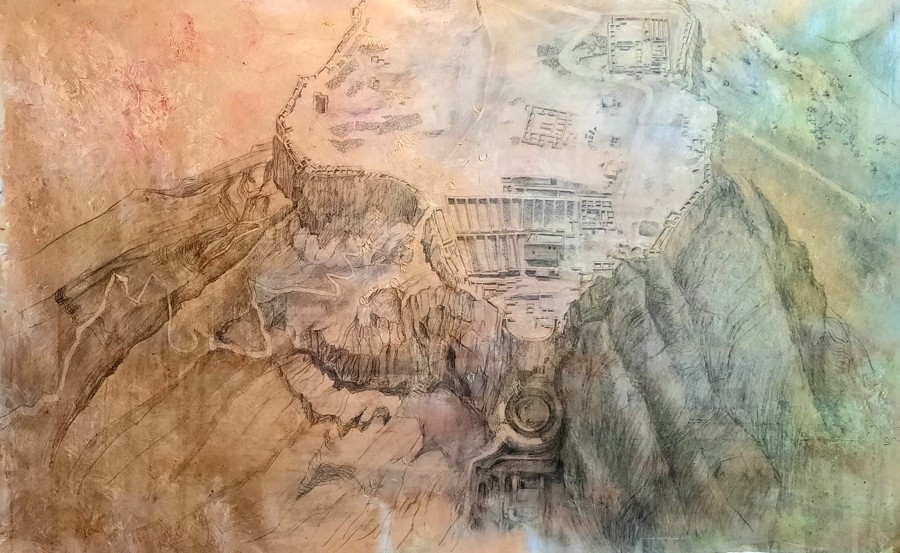
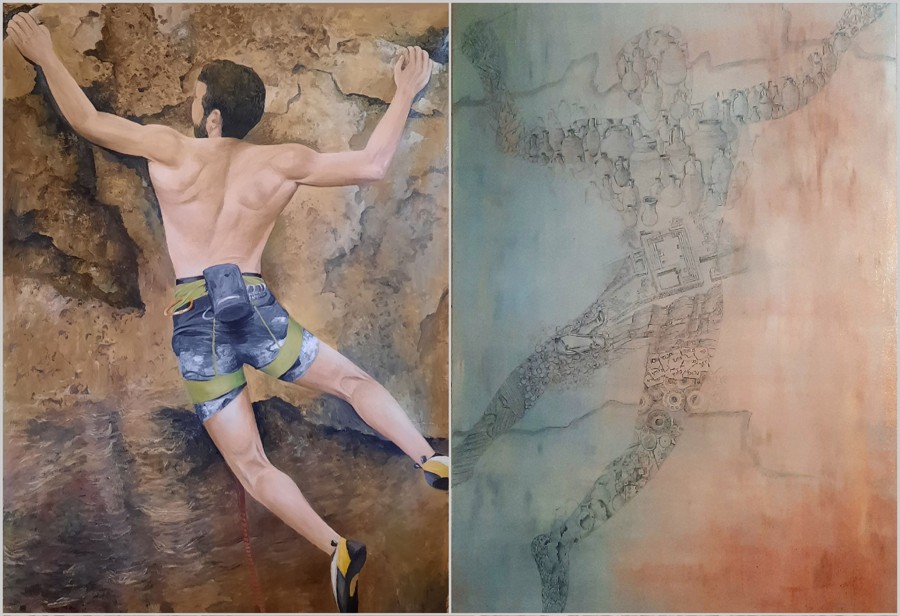
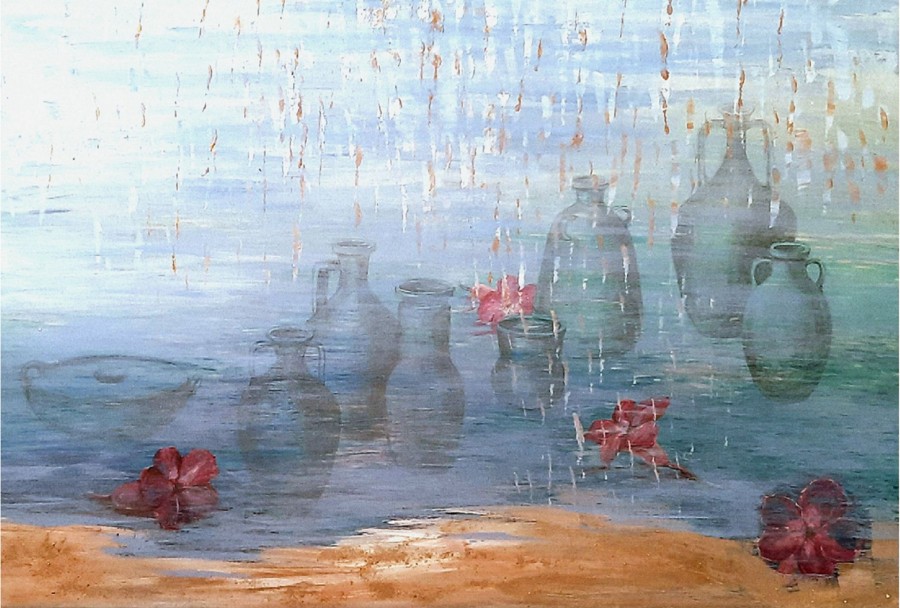
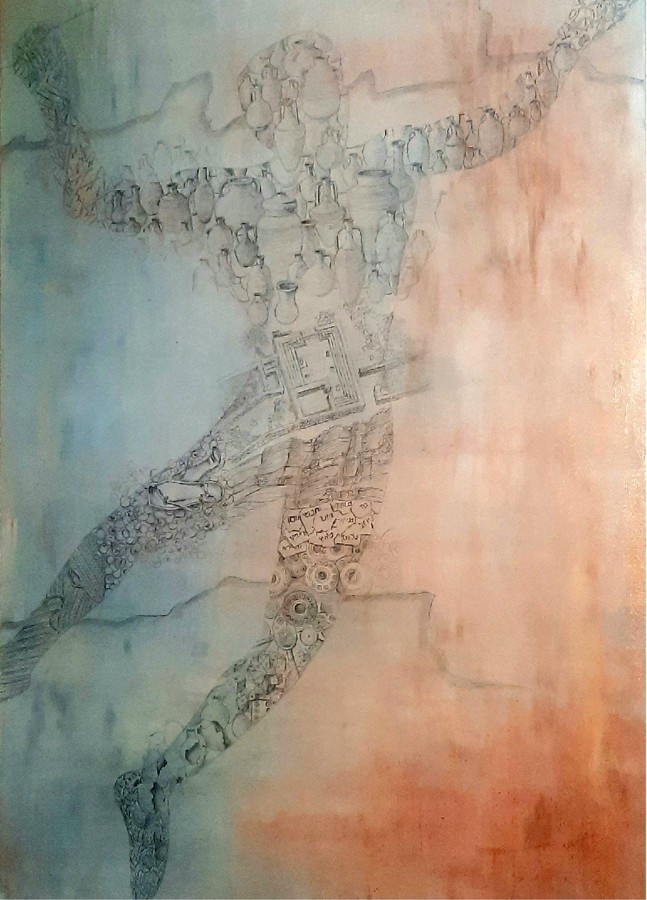
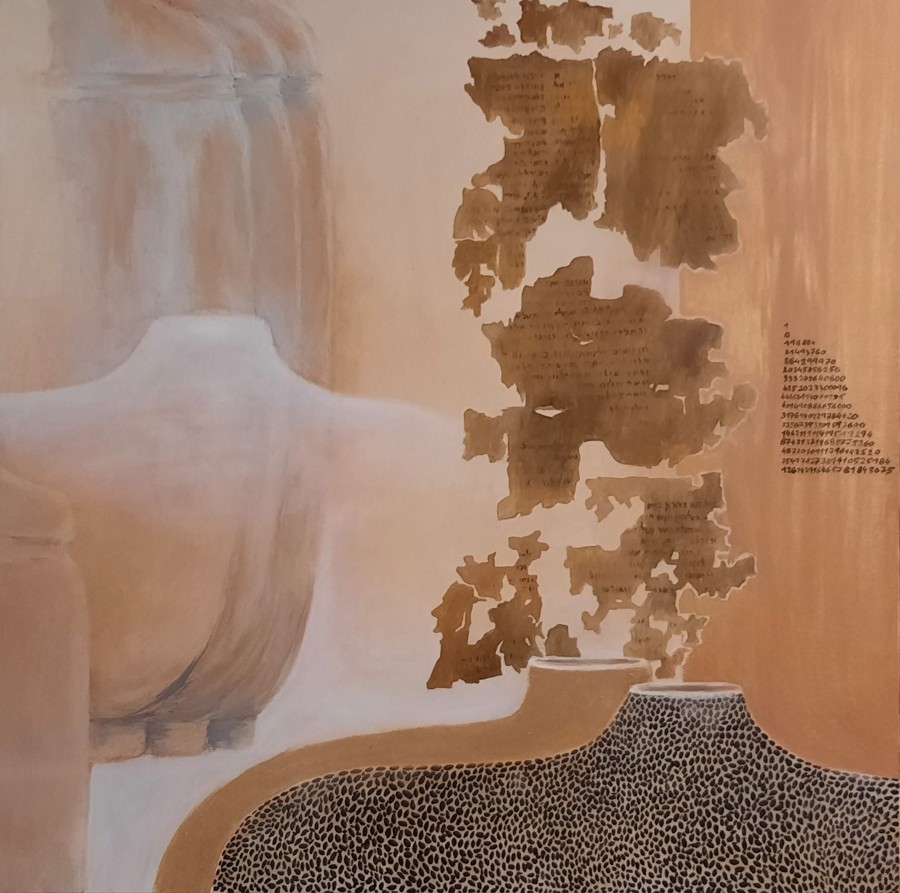
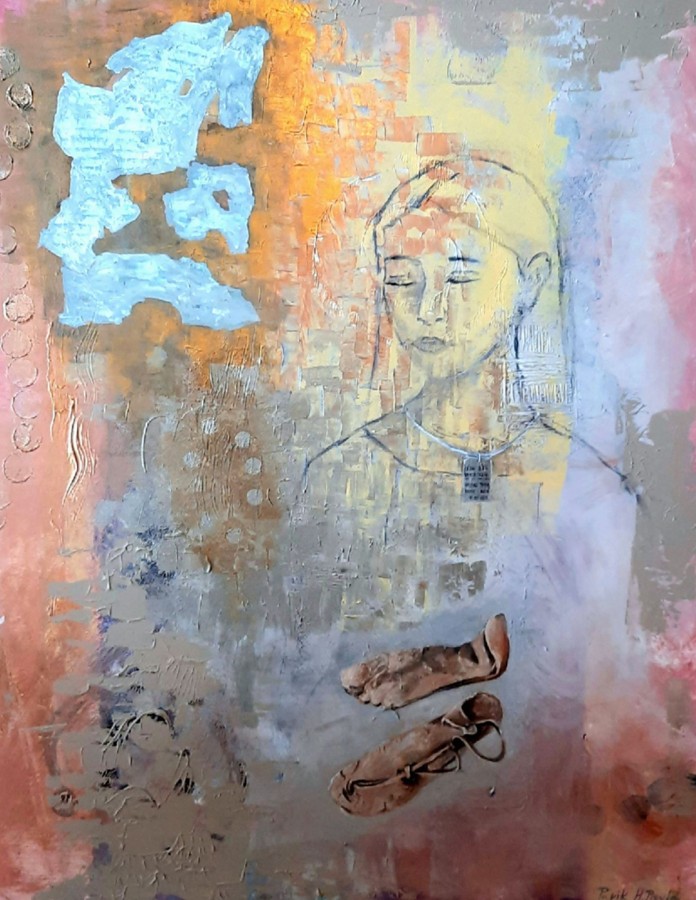
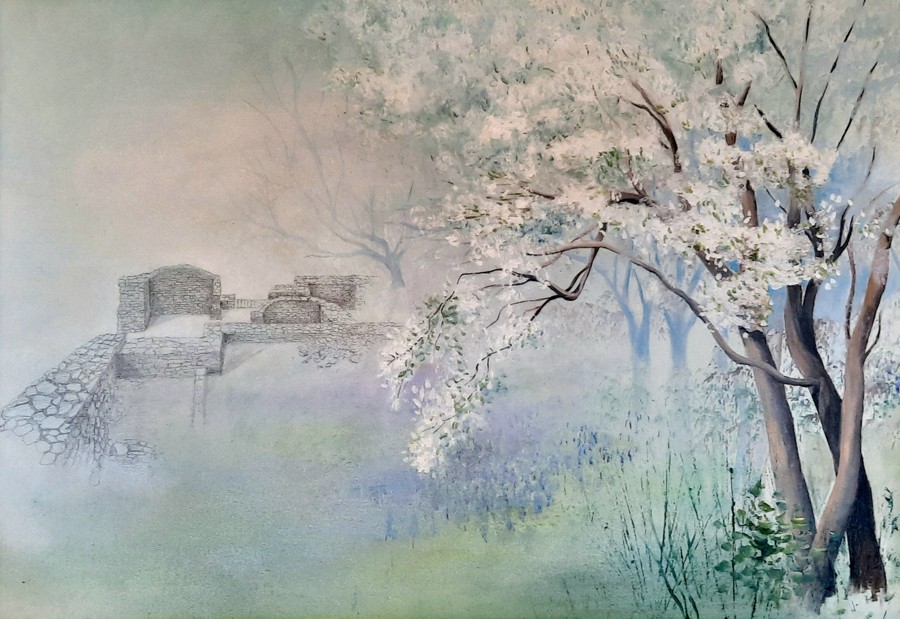

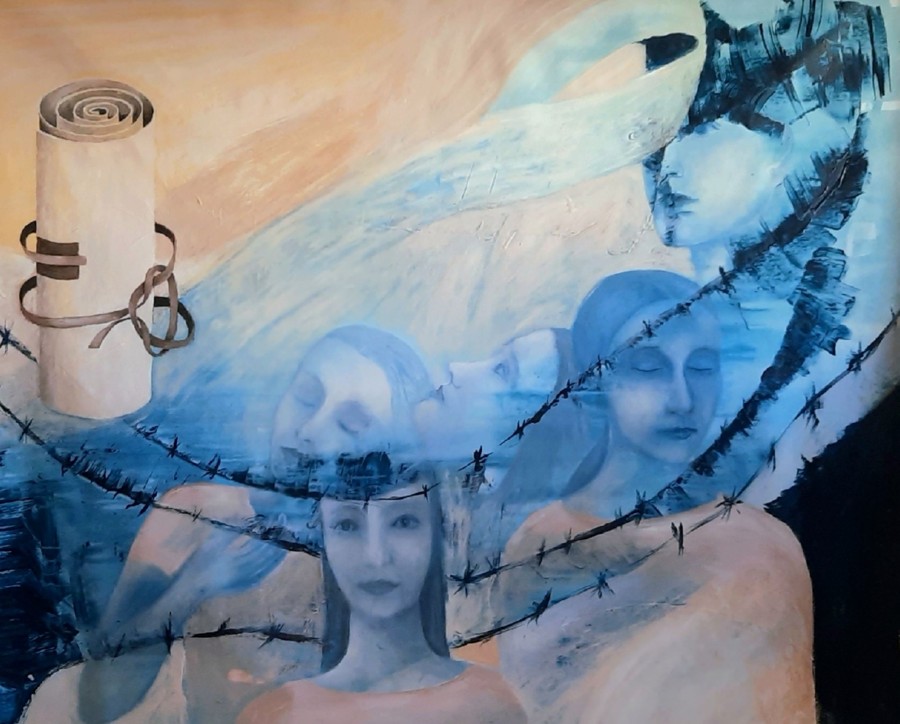
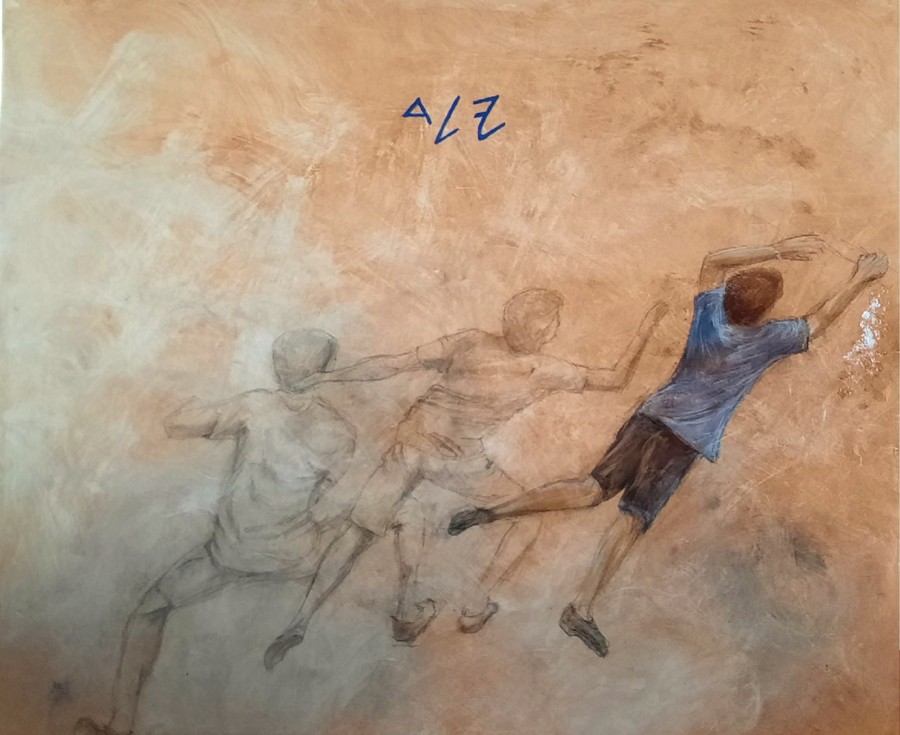
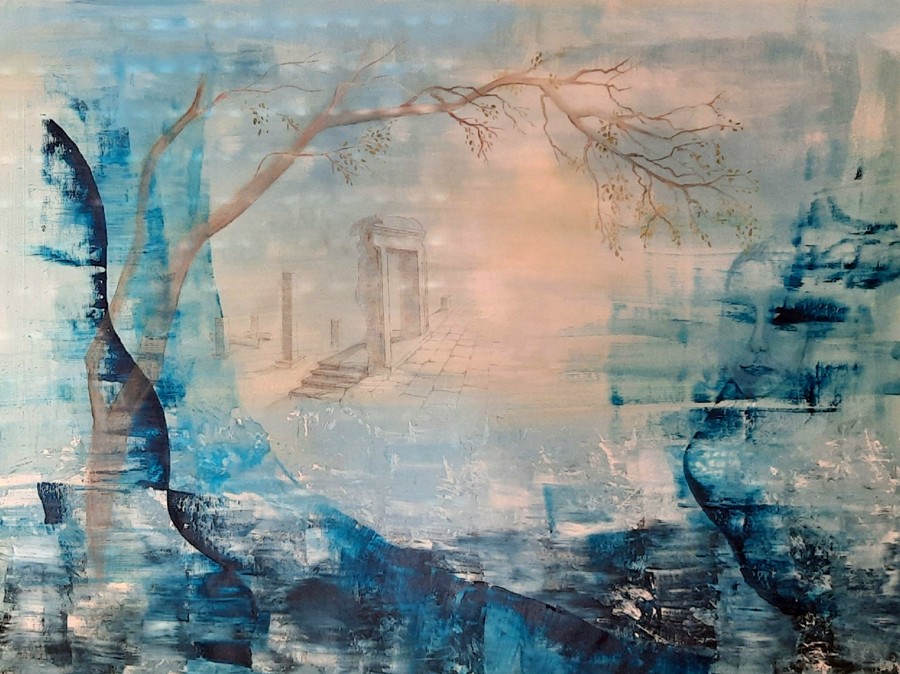
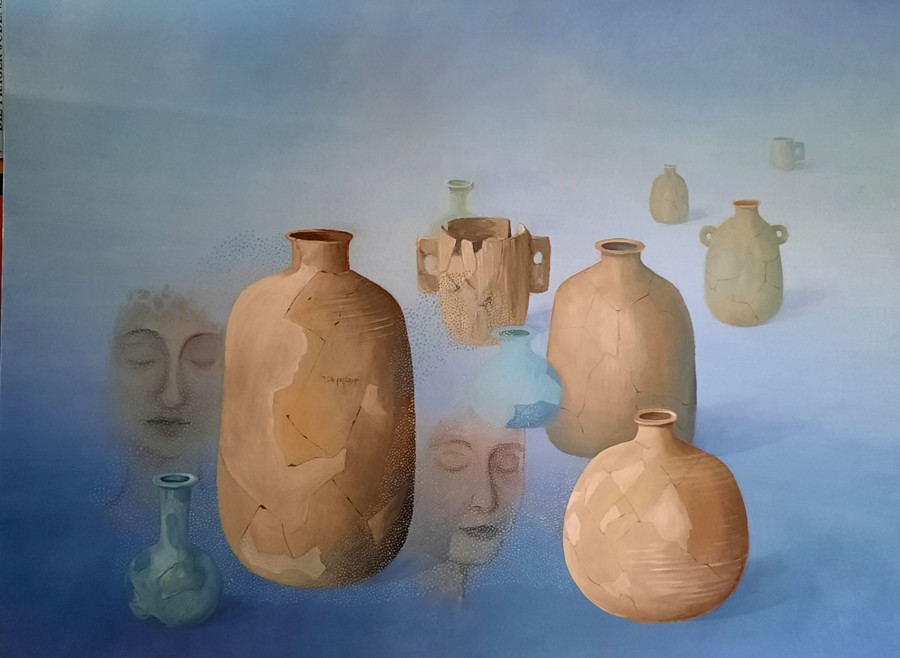
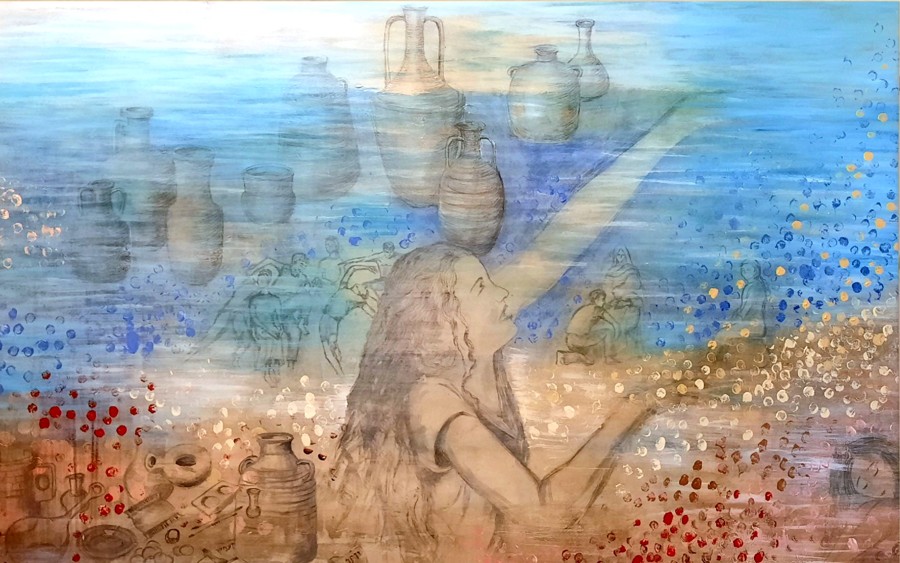
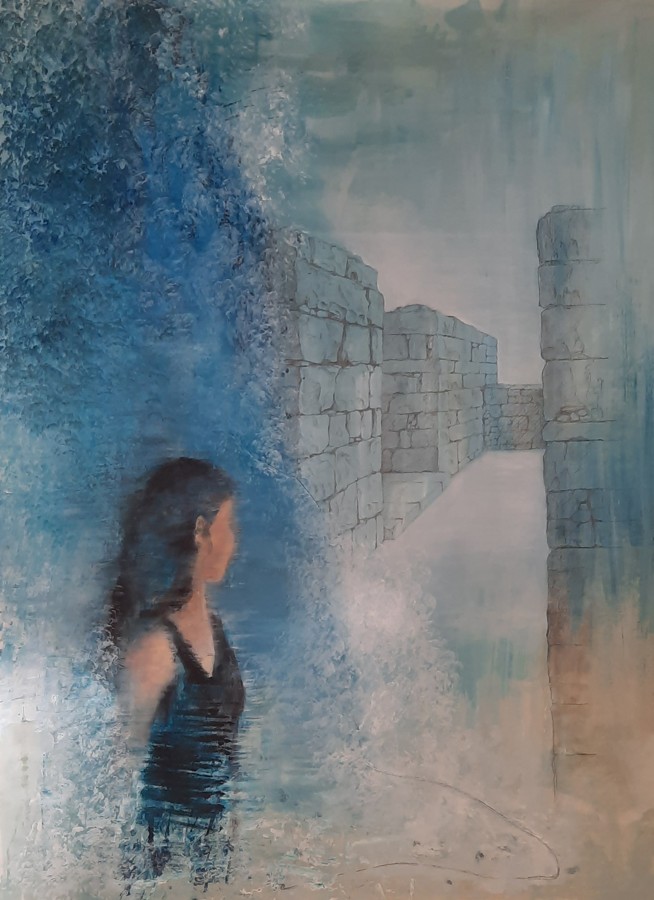
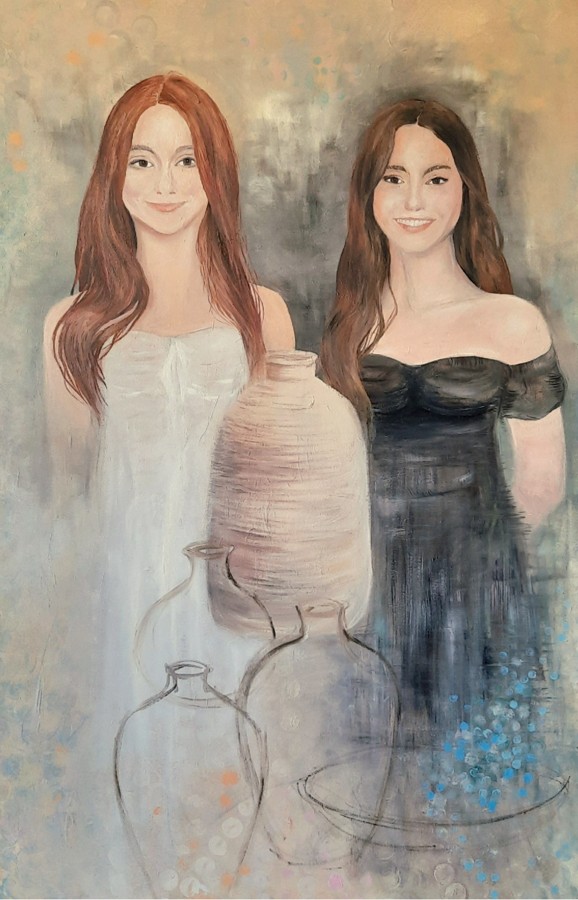
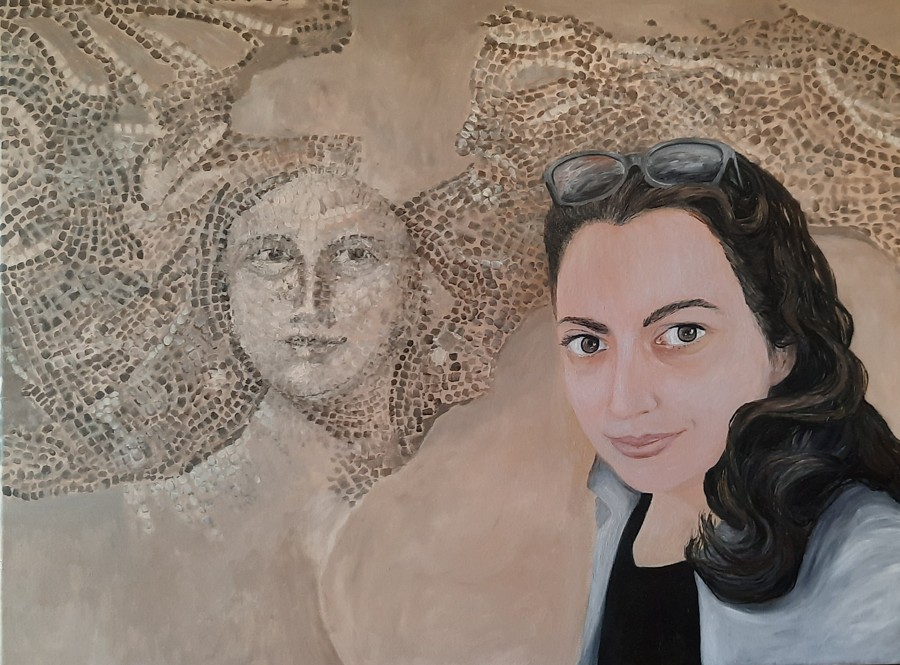
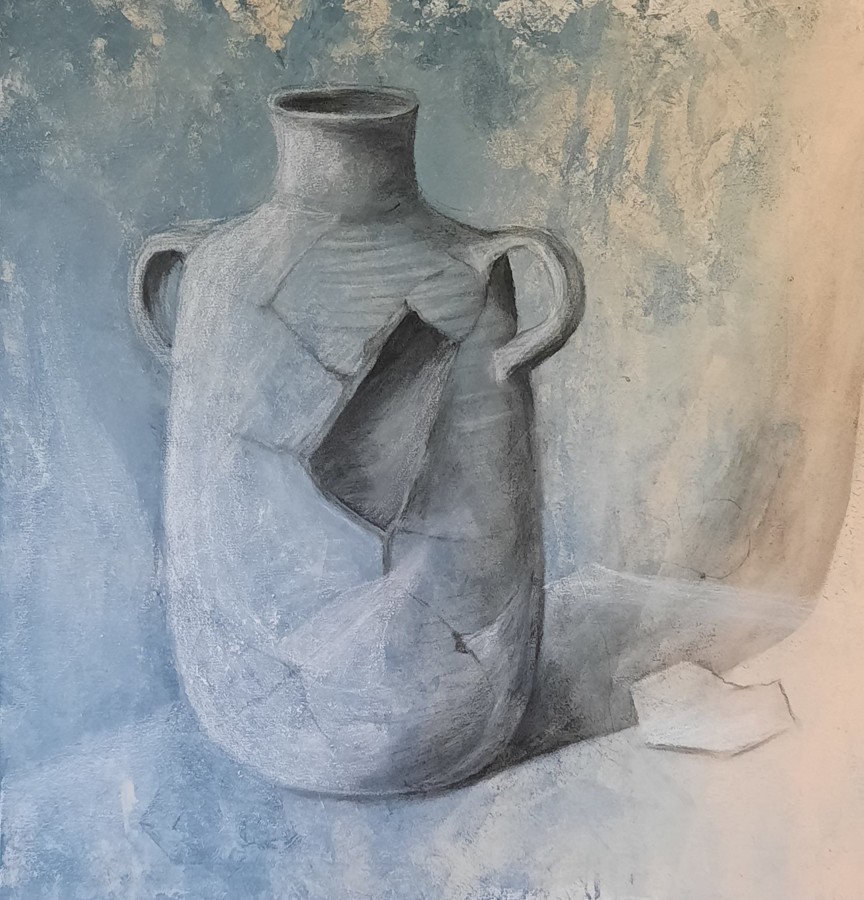
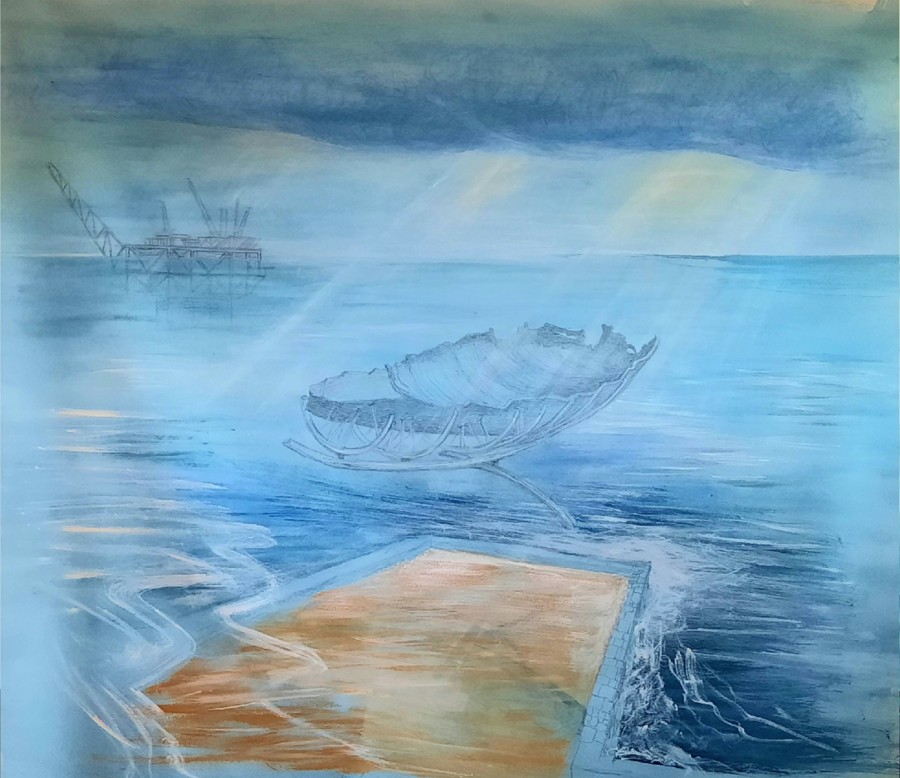
In this body of work, Pavla Parik approaches landscape and historical imagery as a form of archaeology of consciousness. Her paintings explore how layers of history—ancient, modern, and immediate—coexist within the same cultural and psychological space.
Drawing inspiration from archaeological sites such as Masada and pivotal moments in Jewish history, Parik treats the painted surface as a stratified field, where fragments of time appear simultaneously rather than sequentially. Scrolls, architectural remnants, symbolic objects, and abstract figures function like artifacts emerging from the soil, revealing how memory is embedded within both land and collective identity.
Forensic Archaeology: Critical analysis of her "archaeological" series notes a shift from aesthetic ruins to forensic documentation. This approach adds a layer of "unpleasable" moral depth, transforming the canvas into a site of active investigation rather than passive viewing. The viewer is compelled not merely to observe history, but to reckon with its ethical and emotional weight.
Central to this approach is Parik's use of layering. Technically, she employs translucent glazes, pencil structures, and varied backgrounds, but conceptually these layers represent different strata of human experience—history, trauma, endurance, and hope. Unlike narrative forms that unfold in sequence, painting allows these dimensions to exist within a single visual moment, enabling the viewer to encounter multiple historical realities at once.
Through this method, Parik transforms the canvas into a site of temporal convergence. Ancient resistance, historical catastrophe, and contemporary events become interconnected threads within an ongoing continuum of memory. The works do not attempt to reconstruct history; rather, they reveal how the past continues to shape the moral and emotional landscape of the present.
The depth of Parik's work lies in this fusion of archaeology, memory, and reflection. Her paintings suggest that history is not confined to ruins or archives but lives within the layers of cultural consciousness. In this sense, the act of painting becomes both remembrance and ethical inquiry, acknowledging suffering while affirming the enduring resilience of the human spirit.